Digital football match report on the sideline
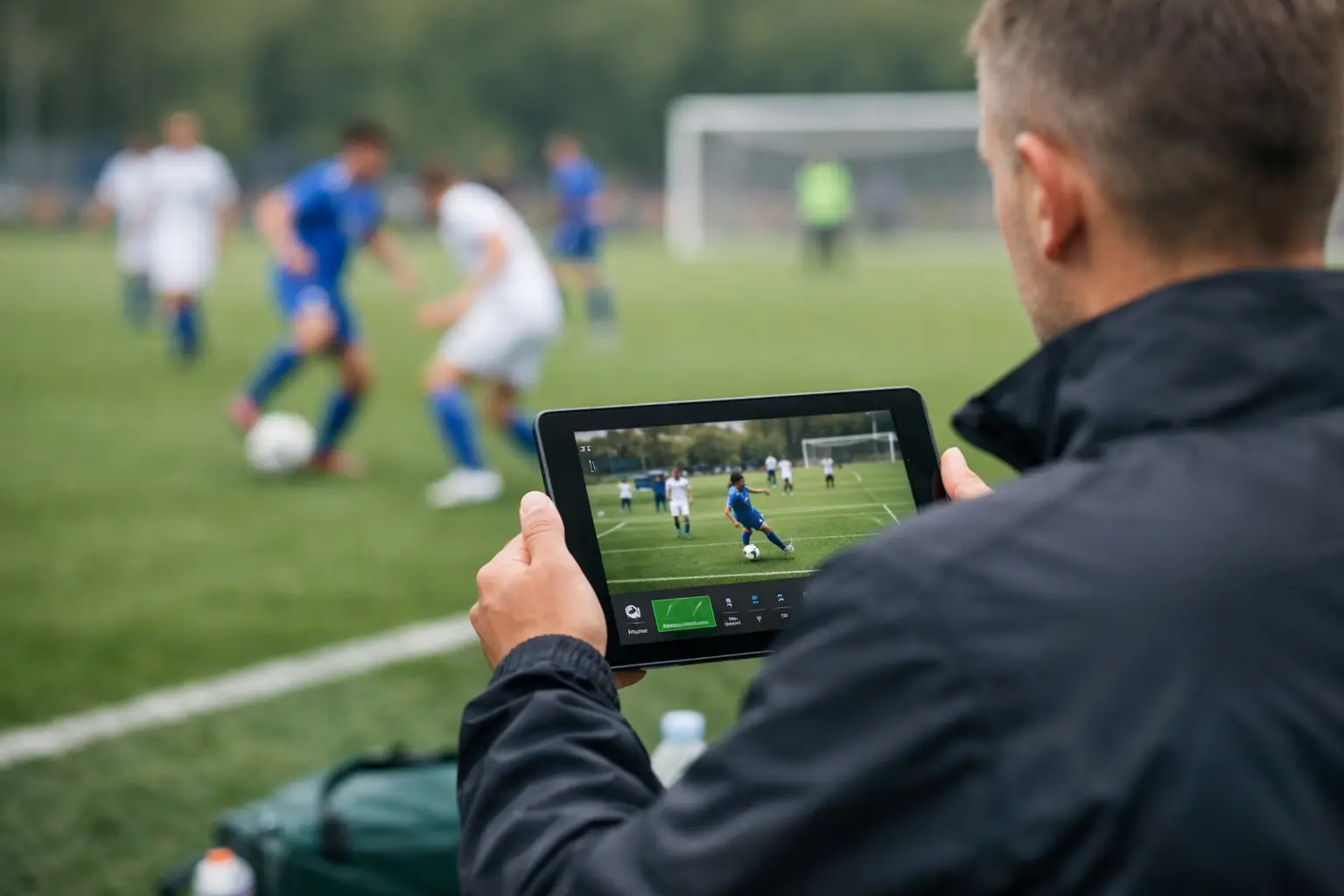
It rarely takes more than a few minutes before paper, loose notes and quick messages start working against you on match day. When goals, substitutions, cards and playing time all have to be followed at the same time, a digital football match report quickly becomes less of an extra tool and more of an essential workspace for coaches who want control from the first kick.
Why a digital football match report works better during the match
On the sideline the pace is high and your attention is divided. You watch the game, weigh up the next substitution, keep track of workload and at the same time try to remember who picked up a yellow card in the 27th minute. This is exactly where digital match reports stand out. They move the recording into the same workflow the match actually demands - fast, simple and available at a single tap.
The key point is not that the solution is digital in itself. What matters is that it reduces friction. If you have to leaf through sheets of paper, unlock several systems or write long notes while the game is going on, you lose both time and focus. A good digital setup lets you record events immediately without losing sight of what is happening on the pitch.
For many teams this is also the difference between rough estimates and actual data. That applies particularly to playing time. Many coaches believe they share out the minutes fairly evenly, but once the match is over it often turns out that some players have had clearly more or less than planned. With digital recording it becomes visible while the match is still under way.
What a good digital match report has to solve
A digital football match report has to be built for live use, not just for documentation after the match. That is a crucial difference. If the system is designed first and foremost for reporting afterwards, it does little to help when you are in the middle of a hectic second half.
The core functions therefore have to be quick to use. Goals must be recordable with a single action. Substitutions must be updated with no more steps than necessary. Cards must be linked to the right player straight away. And playing time must update automatically or with minimal effort. The fewer choices you have to make along the way, the better the solution works in practice.
Readability is just as important. On the sideline you do not need an over-designed interface. You need clear names, large tap targets and a logic that makes sense under pressure. A coach or team manager should be able to use the tool without stopping to think. That is what separates a match tool from a general note-taking app.
It also has to work across formats. The needs in 5-a-side football are not quite the same as in 11-a-side, but the requirement is the same: quick control over who is playing, what has happened, and what you need to do the next time the ball is out.
From notepad to working tool
Many coaching teams start with what they have to hand - paper, phone notes or a message thread where someone tries to keep track. That can work for short spells, especially if the matches are simple and the workload low. The problem arrives when the details pile up.
As soon as you want to follow both match events and playing time, manual record-keeping becomes fragile. A forgotten note looks small in the moment, but it creates uncertainty afterwards. Who was actually on the pitch when the opponents scored? How long did the left-back play in the second half? Did everyone get the same number of minutes this weekend, or only almost?
A digital match report does more than replace paper. It brings match management together in one system. That means you are not only documenting the match, but using the record actively while it is being played. When the information is updated in real time, it becomes easier to make better decisions along the way.
Better decisions with up-to-date match data
Most people associate a match report with something that gets finished after the final whistle. For coaches on the sideline the greatest value is often before the match is over. When you can see goals, cards, substitutions and playing time together at all times, you have a basis for decisions that is far better than memory alone.
That applies especially in matches where you want to balance development and results. In grassroots football it is common to work on both at once. You want to win the match, but also give enough minutes to the whole squad. Then it helps to see workload and playing time as you go, rather than only when you get home.
It also improves communication within the coaching team. When one person has clear control of the match administration, the rest are spared from guessing or asking the same questions several times. Who is making the next substitution? How many minutes has the striker played? Have we already used the planned rotation in midfield? With an up-to-date record, the answers are simple.
What coaches should look for in a solution
It is easy to be swayed by feature lists, but on match day it is the small things that count. A good solution has to be quick enough that you actually use it throughout the whole match. If it feels heavy in the first ten minutes, it is often put aside before half-time.
So look for simple recording of goals, cards and substitutions, a clear overview of the squad and running playing time without unnecessary steps. It should also be easy to correct a mistake. In live situations, mis-recordings are going to happen. It then has to be easy to tidy up without ruining the rest of the match picture.
It is also worth thinking about who uses the solution. A head coach often has different needs from a team manager or assistant coach. Some want full control of everything. Others just need to record events quickly and safely. The easier the system is to understand, the easier it is to keep a steady match flow around the whole team.
When simple beats advanced
In football technology it is easy to be tempted by platforms that promise everything at once. But for match administration, breadth is not always an advantage. A tool that tries to do a bit of everything often becomes slower in the specific situation where you need it most.
For a digital football match report, specialisation is often the strength. If the solution is made for the sideline, you notice it straight away. The workflow is shorter. Recording is faster. And you spend less mental capacity on the tool itself. That frees up attention for the players, the match and the next decisions.
That does not mean advanced solutions are always wrong. For some settings, integrations and larger administration systems can be useful. But it depends on the context. For many coaching teams in children's, youth and amateur football, the most important thing is that the tool works immediately when the referee gets things going.
A digital football match report in practice
The practical gain comes in the small moments. A quick tap when there is a goal. A clear entry when one player comes off and another comes on. An up-to-date overview showing who has played the most and who should come on at the next stoppage. These are not big administrative processes. They are small actions that build control throughout the whole match.
For coaching teams who want to work more precisely without making match day heavier, this is what matters. You do not need more to keep track of. You need fewer things to think about at once. A tool like MatchDay is made for exactly this - simple match management from an iPhone or iPad, straight from the sideline, with no paperwork and no unnecessary detours.
The most important thing is that the system fits the reality you are in. The match does not wait while you hunt for the right screen. That is why a digital match report has to be fast, clear and built for football the way it is actually run from the sideline.
When you know the recording is under control, it also becomes easier to be present in the match. That brings calm. And on match day, calm is often what creates the best decisions.