How to manage a football match digitally, made simple
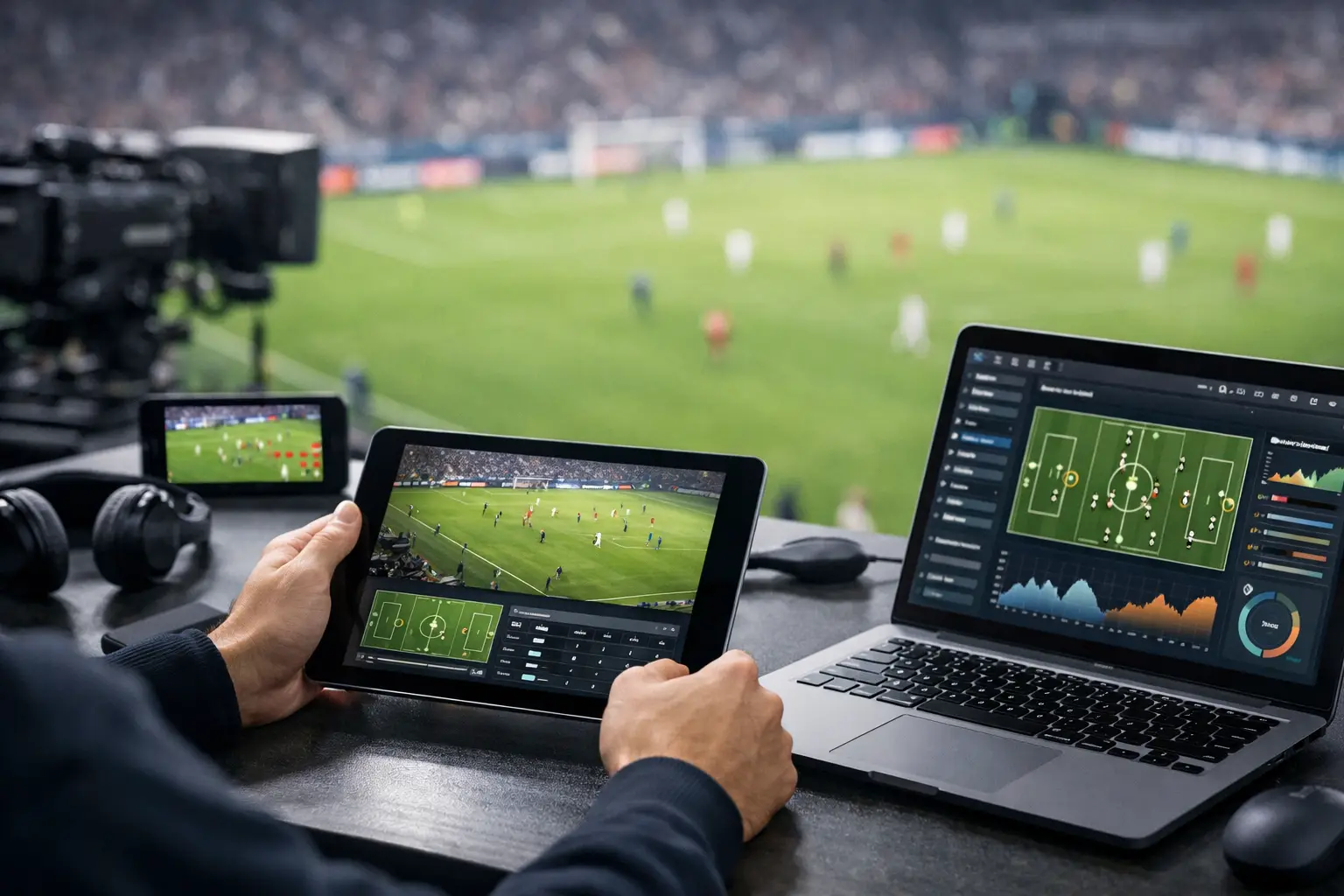
A match is rarely decided by what happens on the pitch alone. It is also decided by what you actually manage to keep track of along the sideline. When substitutions come thick and fast, playing time has to be shared out, and someone asks who got a yellow in the last period, many coaches quickly realise that the old setup does not hold up. To understand how to manage a football match digitally, it comes down first and foremost to making match administration simple enough to work while the match is under way.
Why digital match management actually makes the job easier
Scraps of paper, loose notes and messages across several channels create unnecessary friction. It is not a problem until the pace picks up. Then it suddenly becomes hard to remember who came on last, how long a player has actually been on the pitch, or whether you have already used the substitution you are considering.
Digital match management removes much of this pressure. Instead of remembering everything yourself, you record events as they happen. One tap for a goal. One tap for a substitution. One tap for a card. It sounds simple, and that is exactly the point. When the tool is fast enough, you get better control without shifting your attention away from the match.
That does not mean technology makes you a better coach on its own. But it can give you a better basis for decisions. There is a big difference between thinking a winger has played long enough and knowing it.
How to manage a football match digitally in practice
The most effective way to manage a match digitally is to think in three phases: before the match, during the match and right after the final whistle. If one part fails, the rest quickly becomes more cumbersome.
Before the match: build a setup that copes with the pace
The most important thing before kick-off is not to enter as much information as possible. It is to enter the right information, in a way that saves time later. Start with the squad. Make sure players are ready with names and roles, and that you know which match formats you are working with, whether it is 5-a-side, 7-a-side, 9-a-side or 11-a-side.
Then you should be clear about what you actually want to track. For some teams it is enough to record goals, cards and substitutions. For others, playing time is just as important, especially in youth and grassroots football where the distribution has to be tidy and fair. The clearer you are before the start, the less thinking you have to do along the way.
This is also where digital tools differ from general note-taking apps. An app built for match administration sets up events the way a coach actually uses them. You avoid improvising a system while the match has already begun.
During the match: record events immediately
Live match management only works if recording is fast. If you have to flick through menus, write long notes or keep correcting mistakes, the whole benefit falls away. On the sideline you need a setup built for one purpose: getting things in the moment they happen.
Goals should be recorded the moment they come. The same goes for cards and substitutions. If you wait until half-time because you "will remember it", you have already increased the risk of error. Small inaccuracies quickly become big ones when they affect playing time, the order of substitutions or internal match analysis afterwards.
Playing time is a good example. Many coaches try to keep it in their heads, especially when they know the squad well. That works until the match becomes hard to follow. An injury, a quick goal against or several substitutions in a short space of time is often enough for the overview to fall apart. When playing time is recorded continuously, you get a far safer basis - both for sporting choices and for fair distribution.
What you should be able to manage digitally from the sideline
When people ask how to manage a football match digitally, they often mean more than just keeping match notes. They want control over what actually matters while the match is alive.
Goals and cards are obvious events, but substitutions are often what create the most stress. In grassroots and youth football the substitution flow is rarely completely linear. Some players are meant to get certain periods, others have to come off because of load, and some matches call for quick adjustments. Then it is an advantage to see who is on, who is off, and what that does to playing time without having to work it out yourself.
The same goes for different match formats. Managing a 5-a-side match is not the same as running an 11-a-side match. The number of players, the substitution frequency and the flow of the match are different. That is why the digital tool should adapt to the format, not force the coach into one standard model.
The advantage of one tool instead of several
Many teams use a mix of paper, messages, a stopwatch and perhaps a spreadsheet afterwards. It can work, but it creates lots of small transitions. Every transition is a place where information can be forgotten, mis-entered or delayed.
A single, mobile setup gives a more direct workflow. You record the event once, and then it is logged. There is less to double-check afterwards, less to clean up, and less of the coach's focus goes on administration while the match is being played.
It is also easier to delegate. An assistant coach or team manager can run the match using the same logic the head coach uses. That makes it easier to work in a structured way, even when several people share responsibility on match day.
What sets a good digital tool apart from one that just looks nice
It is easy to be impressed by lots of features. On the sideline that is rarely the most important thing. What you need is speed, clarity and as little friction as possible. A good tool lets you do the most common tasks with very few taps and without training that eats into your time.
It should also work in a real match, not just in a demo. That means the buttons have to be easy to hit, the screen has to be understandable under pressure, and the flow has to cope with rapid changes. If it takes too long to record a substitution, you will put it off. If it is unclear who is listed as an active player, you lose trust in the system.
This is why dedicated match tools have a clear advantage over more general solutions. They are built around the coach's real situation. MatchDay is an example of that kind of tool - built to record goals, cards, substitutions and playing time quickly from an iPhone and iPad, without unnecessary detours.
When digital match management delivers the most value
Not all matches are equally demanding to manage. If you have a small squad, few substitutions and simple logistics, you can get by fine with a simple setup. But the more structure the team needs, the more value digital management provides.
This is particularly true in three situations. The first is when playing time has to be shared out precisely. The second is when several people in the support team need the same overview. The third is when the pace of the match makes manual note-taking too slow.
For youth teams, academy environments, grassroots clubs and semi-professional setups this is often everyday reality. Then digital match management is not an added luxury. It is a way of working more precisely without making match day more complicated.
Common mistakes when managing a match digitally
The most common mistake is choosing a system that does too much. The more fields you have to fill in along the way, the greater the chance that the recording grinds to a halt. Start with the essentials instead and build from there.
Another mistake is waiting too long to record. If you enter events afterwards, you lose much of the benefit of working digitally. The point is not just to store data. The point is to have an overview while you can still use it.
The third mistake is underestimating the match format. A setup that works for 11-a-side is not always as effective in 7-a-side with frequent substitutions. The tool should fit the match you are actually in.
It is not about more screen time
Some coaches are sceptical about actively using a phone or tablet during a match. That is understandable. Nobody wants to stand with their head down in a screen when the team needs leadership. But good digital match management is not about looking at the screen more. It is about spending very short moments on recording, so that you avoid spending the rest of the match trying to remember.
That is an important distinction. When the tool is fast enough, there is less administration, not more. You free up capacity for coaching, organising and decisions along the way.
For most coaches that is the real gain. Not that the match becomes more technical, but that it becomes easier to manage when the pressure is high. If you want control over goals, substitutions, cards and playing time without building a cumbersome system around it, digital match management is a very practical place to start. The best solution is usually the one you can actually bring yourself to use every single match.